

After making kimchi with my mom in Korea, she suggested that I try making it for myself in the U.S. since kimchi is pricey here.
Since I could not attempt the full-on version for kimchi and definitely needed a simpler recipe, my mom generously offered her insight and came up with a quicker recipe for homemade kimchi. This recipe is more like fresh geotjeori (quick kimchi that comes sliced already).
It took awhile to wash and brine the veggies, but after that part was done, marinating it was not too hard since it was just one cabbage. All in all, I’m super happy with the results and hope you can enjoy it too!
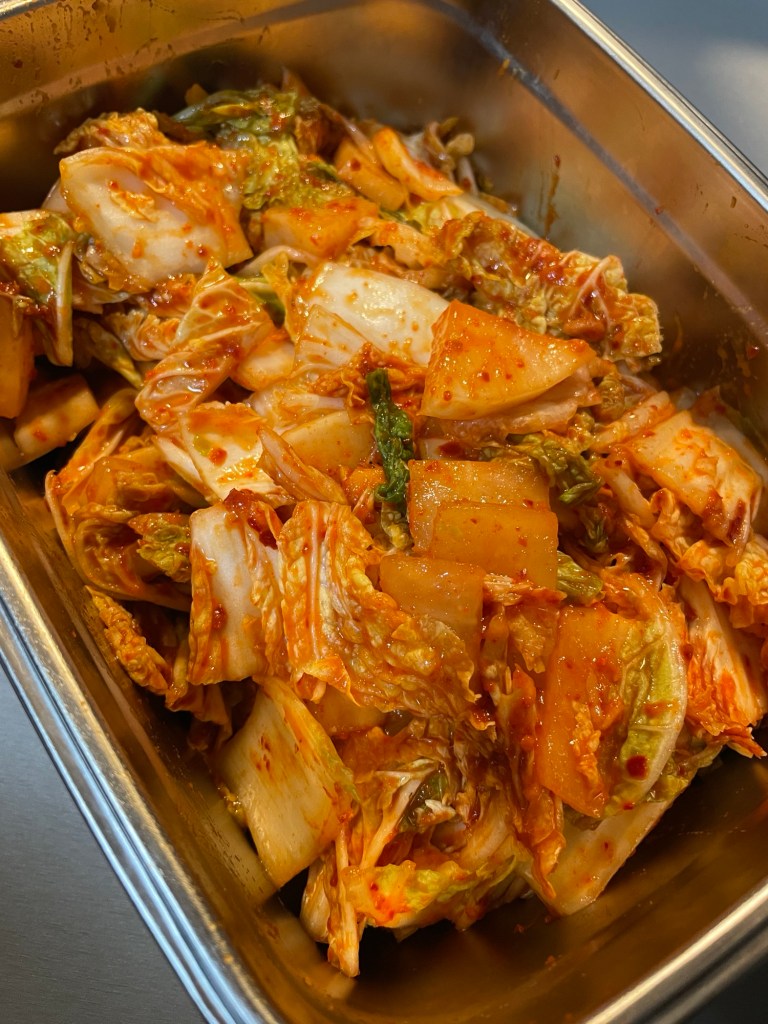
Ingredients:
1 Napa Cabbage
1/2 Korean radish
4 Tbsp Salt
Water
1 Tbsp chapssalgaru (glutinous rice powder)
1/2 cup Korean crushed red pepper flakes
3 Tbsp Korean anchovy fish sauce
1 Tbsp saeu-jeot (Korean fermented shrimp)
5 cloves of garlic, minced
1/2 Tbsp minced ginger or ginger powder
Directions:
1. Wash and slice the cabbage into bite sized pieces and brine the cabbage in salt water until the cabbage looks soggy. I separated the leafy parts from the stems, since the stems take longer, and added 4 cups of water and 2 Tbsp of salt to each batch. The leafy parts took about 3 hours and the stems took 5-6 hours to brine. It should feel soft once they are done.
2. Wash and slice the Korean radish into thin squares and brine the Korean radish. I added 3 cups of water and 1 Tbsp of salt. It took around 30 minutes to brine. Once the radish is done, drain it and set it aside.
3. Prepare the marinade by mixing the glutinous rice powder and 7 Tbsp of water and then boiling it. Once it starts boiling reduce the heat to medium low and mix until bubbles form. Make sure it is mixed well.
4. Add the pepper flakes to the rice powder mixture and mix. Then add the anchovy fish sauce, fermented shrimp, garlic, and ginger and mix well. Leave this mixture for around 1-2 hours.
5. Once the cabbage is done brining, you can add the marinade to the cabbage and radish and mix it well so that the sauce is evenly distributed
6. Put in a container making sure to pack it densely so that the least amount of air gets in the container.
7. If you like fermented kimchi, leave the container at room temperature for one day so that the kimchi ferments and then move it to the refrigerator. If you like fresh kimchi you can put it straight into the fridge.
8. Enjoy with some rice and dish dishes!
Pro tip: Kimchi pairs really well with suyuk (Korean boiled pork belly). Feel free to check out my recipe for suyuk on the blog here: https://communityfoodwaves.com/2021/09/06/suyuk-korean-pork-belly-slices/
 Community Foodwaves